























































Hip dips have become a widely discussed topic in recent years, especially as conversations around body image, fitness, and self-acceptance continue to evolve. You might have noticed the term popping up on social media, in fitness forums, or during conversations about body shapes. Despite the buzz, there’s still plenty of confusion and misinformation surrounding what hip dip s actually are and what they mean for your body.
In simple terms, hip dips are the inward curves that appear just below the hip bones and above the thighs on some people. They are completely natural and largely determined by skeletal structure rather than weight or fitness level. While some people embrace their hip dips as a unique feature, others feel uncertain or self-conscious about them, often due to unrealistic beauty standards.
This article takes a deep, expert-backed, and relaxed look at hip dip s from every angle. We’ll explore the anatomy behind them, dispel common myths, discuss fitness and lifestyle considerations, and talk honestly about aesthetics and self-confidence. By the end, you’ll have a clear, well-rounded understanding of hip dips—and hopefully a renewed appreciation for how remarkably individual the human body really is.
Understanding What Hip Dips Really Are
Hip dips are a natural anatomical feature that occur where the skin is attached inward between the hip bone (the iliac crest) and the thigh bone (the femur). This indentation is influenced by the shape and position of your pelvis, as well as how muscle and fat are distributed in that area. In other words, hip dip s are not a flaw or a condition; they are simply a variation in human anatomy.
One of the most important things to understand about hip dips is that they are not caused by being overweight, underweight, or out of shape. You can be extremely fit and still have noticeable hip dip s, just as someone with a higher body fat percentage may have very minimal ones. This is because bones play a major role here, and no amount of dieting or exercise can change your skeletal structure.
The term “hip dips” itself is relatively new and largely driven by social media trends. For decades, these natural curves went largely unnamed and unquestioned. Once something has a label, however, it often becomes a focal point for critique or “fixing,” even when nothing is actually wrong. Recognizing this cultural shift helps put the conversation into perspective.
From a medical or anatomical standpoint, hip dips are entirely normal and do not indicate any health issues. They don’t affect mobility, strength, or physical performance. Understanding this foundational truth is key to separating fact from fiction and approaching the topic with clarity rather than concern.
The Anatomy Behind Hip Dips
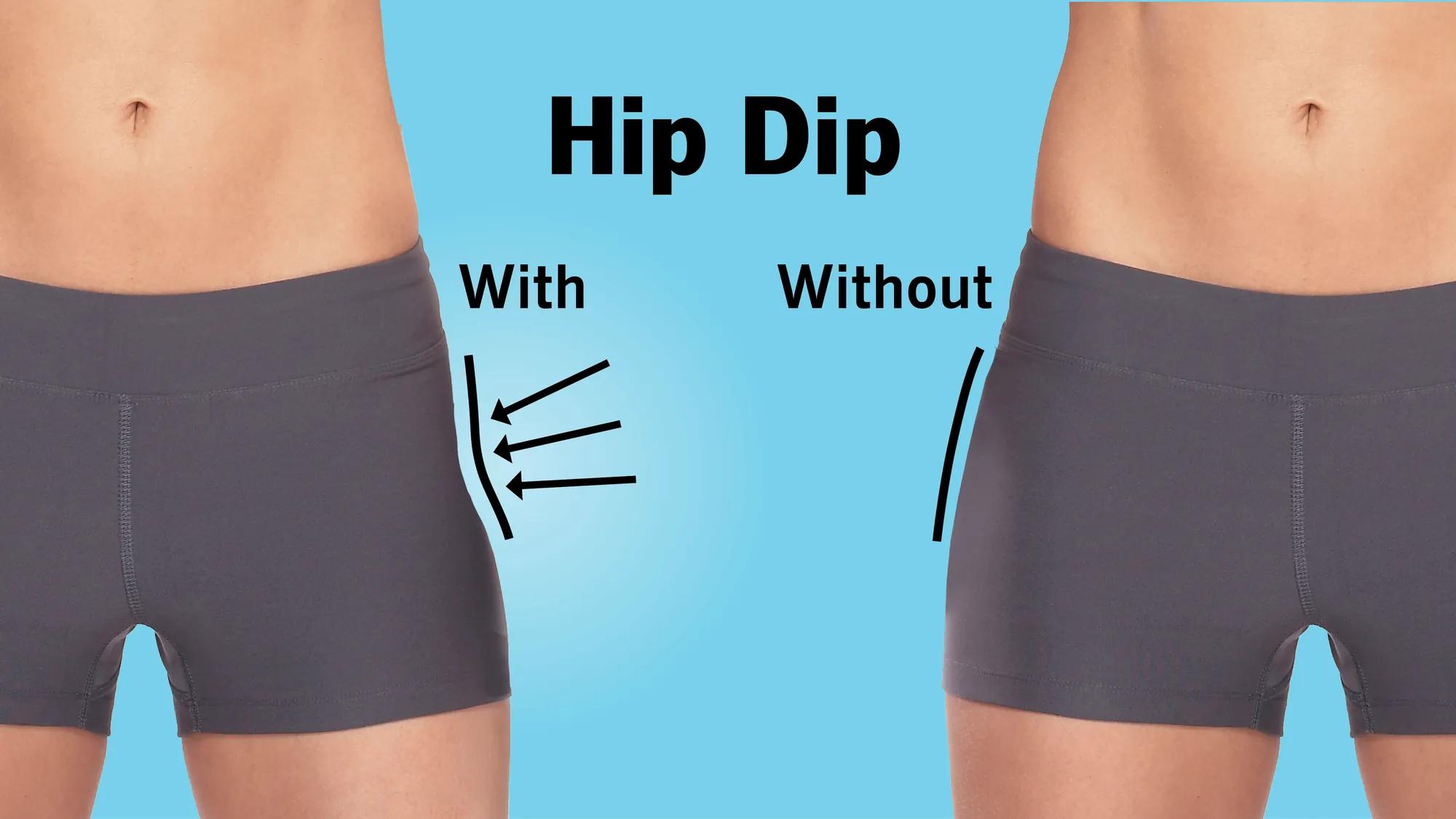
To truly understand hip dips, it helps to look at the underlying anatomy. The pelvis is a complex structure made up of several bones, and its width, angle, and depth vary significantly from person to person. The iliac crest, which is the top edge of the hip bone, sits higher than the greater trochanter of the femur, creating a natural dip in between for many individuals.
Muscle placement also plays a role. The gluteus medius and minimus muscles sit on the outer surface of the pelvis, while the gluteus maximus forms the bulk of the buttocks. Depending on how these muscles attach and how prominent they are, the area between the hip bone and thigh may appear more or less indented. This is why even people who strength train consistently can still have visible hip dip s.
Fat distribution is another contributing factor, though it is secondary to bone structure. Some people naturally store more fat around the hips and thighs, which can soften the appearance of hip dips. Others store fat elsewhere, such as the abdomen or upper body, leaving the hip area more defined. These patterns are largely influenced by genetics and hormones.
It’s worth emphasizing that anatomy is not something to “correct.” Hip dips are a byproduct of how your body is built, not a sign that something is missing or underdeveloped. When viewed through an anatomical lens, they become a neutral characteristic rather than a problem to solve.
Common Myths and Misconceptions About Hip Dips
One of the most persistent myths about hip dips is that they can be completely eliminated through targeted exercises. While certain workouts can build muscle around the hips and glutes, they cannot change the shape of your bones. Exercises may slightly alter the appearance of hip dip s, but expecting them to disappear entirely sets unrealistic expectations.
Another common misconception is that hip dips are a sign of poor health or low fitness levels. This couldn’t be further from the truth. Many athletes, dancers, and fitness professionals have visible hip dip s. Physical performance, strength, and endurance have no direct correlation with whether or not you have them.
There’s also a widespread belief that hip dips are unattractive or undesirable. This idea is almost entirely rooted in narrow beauty standards that favor a specific silhouette. These standards shift over time and are heavily influenced by media representation, photo editing, and trends rather than reality. In many cultures and historical periods, natural body contours like hip dip s were never scrutinized at all.
Finally, some people assume that hip dips are a “female-only” feature. In reality, people of all genders can have hip dip s. Differences in pelvic structure and fat distribution may make them more noticeable in some bodies, but they are not exclusive to women. Clearing up these myths is essential for fostering a healthier, more informed conversation.
Fitness, Exercise, and Hip Dips
Fitness is often brought into the discussion around hip dips, sometimes in helpful ways and sometimes not. Strength training, particularly exercises that target the glutes and hips, can enhance muscle tone and shape. Movements like squats, lunges, hip thrusts, and lateral leg raises can build the muscles surrounding the hip area.
It’s important to approach exercise with realistic goals. While building muscle may add fullness to the hips and glutes, it won’t fundamentally alter your bone structure. Some people notice a reduction in the visual prominence of hip dips with consistent training, while others see little change. Both outcomes are normal and valid.
Cardiovascular exercise and overall fat loss are sometimes suggested as solutions for hip dip s, but this advice can be misleading. Spot reduction is a myth, and losing fat overall may actually make hip dips more noticeable for some people, depending on where their body naturally stores fat. This is another reason why chasing a specific aesthetic can be frustrating.
A healthier approach is to focus on what exercise can genuinely offer: strength, mobility, confidence, and long-term health. When fitness is framed as a tool for well-being rather than body modification, hip dips become just another neutral feature rather than a focal point of concern.
Hip Dips and Body Image
Body image plays a huge role in how people feel about their hip dips. In an era dominated by curated images and filtered perfection, it’s easy to compare your natural body to unrealistic standards. Hip dip s often become a target simply because they deviate from the smooth, rounded silhouettes frequently portrayed online.
Learning to appreciate your body as it is can be challenging, especially when external messages suggest you should want to change it. However, understanding that hip dips are common and natural can be incredibly empowering. When you realize that many people share this feature—including those you admire—it becomes easier to let go of unnecessary self-criticism.
Clothing choices can also influence how you feel about hip dips. Some people prefer styles that highlight their natural shape, while others choose cuts that skim over the hips more loosely. Neither approach is right or wrong. The key is wearing clothes that make you feel comfortable and confident, not ones that hide or “fix” a perceived flaw.
Ultimately, body confidence isn’t about loving every inch of yourself all the time. It’s about respecting your body and recognizing that features like hip dips don’t define your worth, attractiveness, or capability. They are simply part of what makes you uniquely you.
Cultural Perspectives and the Changing Narrative Around Hip Dips
Cultural context has a powerful influence on how hip dips are perceived. In some societies, natural body variations are celebrated, while in others they are scrutinized. The recent focus on hip dip s is largely a product of Western beauty culture and social media amplification.
Historically, beauty standards have shifted dramatically. What is considered desirable today may be out of fashion tomorrow. There was a time when fuller, softer bodies were idealized, and visible bone structure was not emphasized. Understanding this fluidity helps put modern concerns about hip dips into perspective.
Social media has played a dual role in this conversation. On one hand, it has contributed to heightened awareness and, at times, insecurity around hip dips. On the other hand, it has also created space for body-positive voices that normalize and celebrate natural features. Many influencers and educators now openly discuss hip dip s to challenge unrealistic expectations.
As the narrative continues to evolve, there is growing recognition that diversity in body shapes is not only normal but beautiful. Hip dips are increasingly being reframed not as something to correct, but as a reminder that bodies are not meant to look identical.
Conclusion: Embracing Hip Dips with Knowledge and Confidence
Hip dips are a natural, anatomical feature influenced primarily by bone structure, muscle placement, and genetics. They are not a flaw, a health issue, or a sign that something needs to be fixed. Understanding the science behind hip dip s helps dismantle the myths and insecurities that often surround them.
While fitness and lifestyle choices can influence muscle tone and overall body composition, they cannot—and do not need to—erase hip dips. Shifting the focus from changing your body to supporting its health and strength leads to a far more positive and sustainable relationship with yourself.
As conversations around body image become more inclusive and informed, hip dips are slowly losing their stigma. By approaching the topic with curiosity, compassion, and accurate information, you can move beyond comparison and toward acceptance.
In the end, hip dips are simply one of many ways the human body expresses its individuality. Embracing them is less about loving every curve and more about respecting your body for what it is: functional, resilient, and uniquely yours.
(FAQs) About Hip Dips
1.) Are hip dips normal?
Yes, hip dips are completely normal and are primarily determined by your skeletal structure. Many people have them, regardless of body type, weight, or fitness level.
2.) Can exercise completely get rid of hip dips?
No, exercise cannot completely eliminate hip dip s because they are influenced by bone structure. Strength training can build muscle around the area, which may slightly change their appearance, but it won’t remove them entirely.
3.) Do hip dips mean I’m unhealthy?
Not at all. Hip dips have no connection to your health, mobility, or physical fitness. They are simply a natural variation in body shape.
4.) Why do hip dips seem more noticeable on some people?
Hip dip s can appear more noticeable depending on pelvis shape, muscle distribution, fat storage patterns, and even posture. Genetics play a major role in all of these factors.
5.) Should I try to hide my hip dips with clothing?
That’s entirely a personal choice. Some people enjoy highlighting their natural shape, while others prefer different silhouettes. The best option is whatever makes you feel comfortable and confident.