














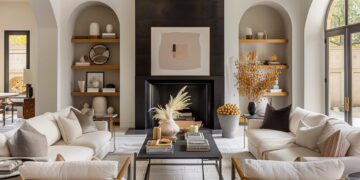








































For decades, we were told that tearing down walls was the ultimate architectural flex. If you had a big house, you wanted to see all of it at once. The open-plan layout became the standard for luxury—a sprawling sea of marble floors where the kitchen bled into the dining room, which bled into the lounge. But honestly, have you noticed how exhausting that’s become? The ultra-wealthy certainly have. There’s a quiet but firm shift happening where the “great room” is being partitioned back into actual, honest-to-god rooms. We’re seeing a return to intentional, purpose-driven spaces, and it feels like a change that’s been a long time coming.
The End of the Echo Chamber
Living in one giant room sounds airy right up until you’re trying to have a serious conversation while someone else is clattering dishes or catching the news. As it turns out, total visibility isn’t actually that relaxing. The trend is pivoting toward “broken-plan” living or, even more traditionally, the return of the door. People want a library that actually acts like a library—quiet, dim, and tucked away—not just a random shelf in a hallway. They want dining rooms that are firmly closed off from the mess of a kitchen.
This isn’t about feeling cramped; it’s about psychological boundaries. When every square inch of your home serves a specific purpose, your brain knows how to shift gears when you enter a space. In a dedicated listening room, you listen. In a sunroom, you reflect. When everything happens everywhere, nothing feels all that special.
Crafting the Individual Atmosphere
If you are looking to reclaim your own space without a full-scale renovation, you can find some pretty solid inspiration in Lottoland’s guide to DIY luxury decor. It’s often those small, tactile shifts—like hanging heavy velvet curtains to kill the echo or using distinct lighting to “zone” a corner—that make a house feel curated rather than just occupied.
The wealthy are now investing heavily in “sensory rooms” or hyper-niche spaces. We’re seeing a rise in high-end hobby rooms that refuse to be called “offices.” Think climate-controlled craft rooms, meditation pods, and “serenity lounges” where phones are flat-out banned. It’s a bit indulgent, sure, but there’s a real logic to it. If you spend your day in a digital world that is infinite and messy, coming home to a room with just one single, physical job feels like a massive relief.
Privacy is the New Gold Standard
Perhaps the biggest reason for this shift is a renewed desire for privacy. Open plans are inherently performative; they’re designed for showing off the scale of a house to guests. But the current mood is much more internal. People want nooks. They want “snugs.”
I suspect we’ll see this continue as our homes become even more central to our lives. We don’t really want a house that looks like a high-end gallery anymore; we want a home that feels like a collection of different moods. It’s about quality of interaction over quantity of square footage.
What do you think? Are you ready to put the walls back up and embrace a bit of mystery in your floor plan, or does the idea of a closed door still feel a little too restrictive?