






















































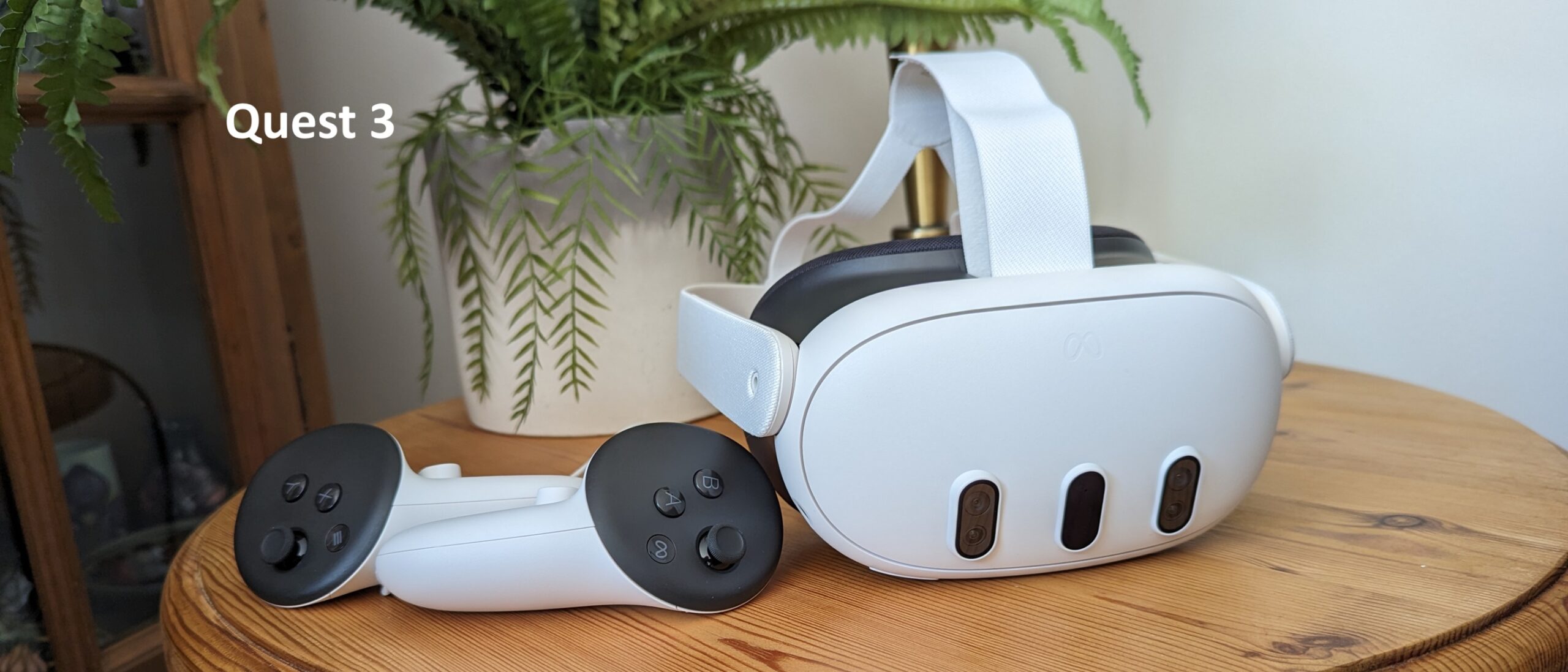
The Meta Quest 3 has quickly become one of the most talked-about VR devices in years, and honestly, it deserves the hype. For the first time in a long time, a headset doesn’t feel like just an upgrade—it feels like a genuine shift in what consumer-level mixed reality can be. Meta didn’t reinvent the wheel here, but they absolutely gave it a turbo-charger and a smoother ride. If you’re wondering whether the Quest 3 is worth your attention—or your wallet—this deep dive will walk you through everything that matters.
A New Design That Feels Much Less Like a Brick on Your Face
The Meta Quest 3 immediately stands apart the moment you pick it up. It’s slimmer, lighter, and better balanced than its predecessor, and that makes a bigger difference than you might think. VR comfort isn’t a glamorous topic, but it’s one of the most important. Nobody wants to feel like they’re wearing a small microwave on their forehead.
The new lenses and pancaked optical design reduce bulk significantly, letting the headset sit more naturally on your face. You feel less pressure on the cheeks and forehead, and long sessions don’t punish you the way they sometimes did on the Quest 2. This matters most when you’re in the middle of an intense game or moving around your room with the mixed-reality passthrough enabled—you forget the device is even there.
The head strap is still a flexible belt rather than a rigid halo, which will never please everyone, but the comfort out of the box is genuinely good. If you want the elite strap, go for it—but unlike the Quest 2, it doesn’t feel mandatory anymore. The cushioning is better, the weight distribution is better, and the build feels more premium. Overall, the Quest 3’s design finally matches the expectations of a next-generation headset.
Mixed Reality That Actually Feels Useful (Not Just a Gimmick)
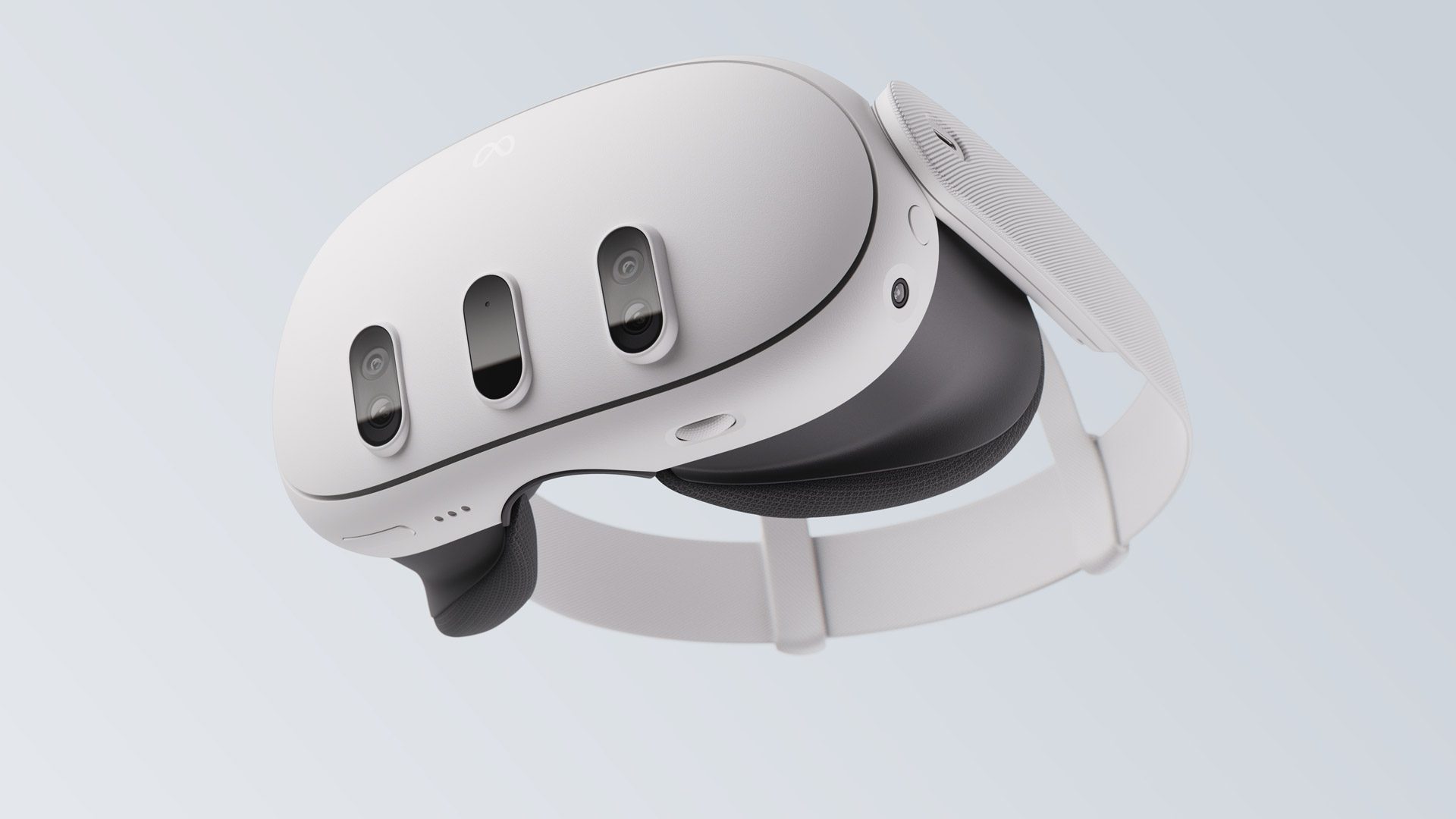
Mixed reality is the star of the show on the Quest 3, and Meta clearly knows it. The full-color, high-resolution passthrough is shockingly crisp compared to the Quest 2’s grainy grayscale camera. You can actually read your phone, see your environment, and interact with physical and digital objects seamlessly. This is the first time on a mainstream headset that MR actually feels like a real feature—not an experiment.
Apps and games are beginning to take full advantage of it too. When you place virtual windows around your living room, they stay where you left them. When enemies burst through your actual walls during an MR game, the effect is way more convincing than you might expect. And when you’re using productivity apps, being able to mix virtual screens with your real desk is surprisingly natural.
The best part? There’s almost no setup. The headset automatically maps your room in seconds. The passthrough is low-latency enough that moving around feels intuitive, and you’re not constantly tripping over furniture or reaching for the boundaries. This is the closest Meta has come to blending your physical and digital spaces in a way that feels truly fluid.
A Powerful Performance Jump That You Can Actually Feel
Under the hood, the Quest 3 packs Qualcomm’s Snapdragon XR2 Gen 2 chipset, and this upgrade is massive. Unlike many generational hardware bumps that sound more impressive than they feel, this one is obvious from the moment you start playing. Load times are faster, textures are sharper, and environments feel richer. The visual clarity in VR games gets a serious boost, especially when developers optimize for the new hardware.
The upgraded resolution and optics combine with the extra horsepower to create visuals that are noticeably cleaner. You won’t see the harsh screen-door effect that earlier headsets struggled with, and colors look more vibrant without over-saturation. Whether you’re fighting off robot hordes, exploring a fantasy world, or just watching a movie in a giant virtual theater, the picture delivers the kind of fidelity VR always should have had.
What stands out most, though, is how smooth everything feels. Frame drops are rare, and motion tracking is incredibly responsive. This substantially reduces VR sickness for most people, because smoother motion equals a more natural experience. You can move faster, play longer, and stay comfortable for hours—yes, hours—without that “maybe I should take a break” moment creeping in too soon.
Controllers and Hand-Tracking That Feel More Natural Than Ever
Meta refined the controllers for the Quest 3, removing the tracking rings and giving them a more compact shape. They feel more like natural extensions of your hands, and the improved haptics offer more detailed feedback. Small vibrations can represent texture, tension, or subtle physical interactions, making games feel more tactile and real.
Tracking has improved significantly too. The headset’s cameras pick up controller movement with impressive accuracy, even during fast-paced sessions. This is crucial for games that demand precision—whether you’re slicing through blocks in rhythm games or aiming down sights in shooters.
But the hidden gem here is the hand-tracking. Meta has clearly invested time refining it, because gestures are smoother, more reliable, and surprisingly intuitive. You can pinch, swipe, grab, and navigate menus without lifting a controller, and the interactions feel deliberate rather than experimental. While hand-tracking isn’t perfect for every game, it’s now good enough that some apps feel better without controllers.
Content, Games, and Experiences That Finally Match the Hardware
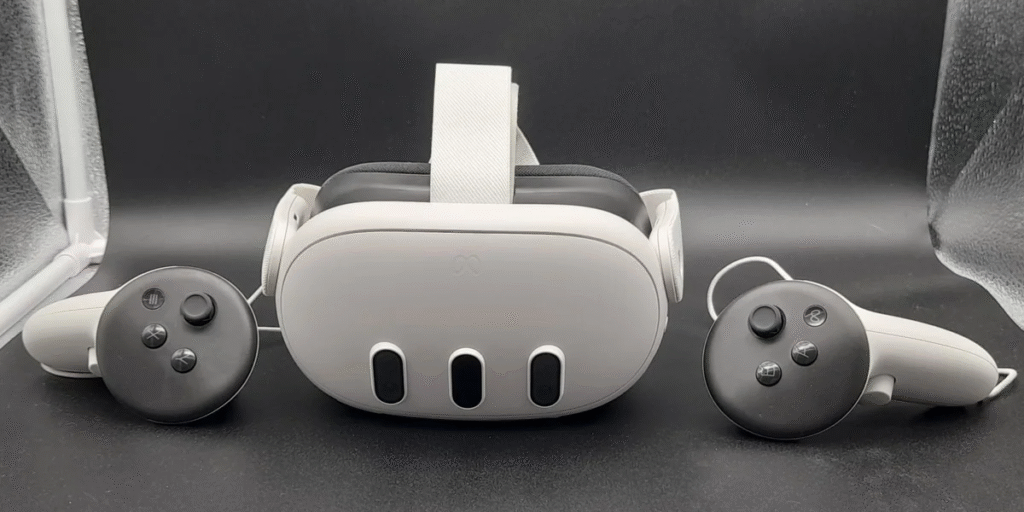
A VR headset is only as good as the content you can run on it, and the Quest 3 doesn’t disappoint. Meta’s library has matured, with hundreds of polished titles and new MR experiences rolling out consistently. Many Quest 2 games get significant visual upgrades on the new hardware, making them feel fresh again.
Mixed-reality titles are the real future here. Games that let you fight virtual enemies in your literal living room or build digital worlds mapped onto your furniture are where the platform shines. Fitness apps are also better than ever—boxing, dancing, and full-body workouts feel more immersive when you’re fully aware of your surroundings.
And for the cinephiles out there: watching movies or YouTube in a virtual theater is still one of the coolest things you can do in VR. The Quest 3 turns any space into a private IMAX experience.
All of this is backed by regular updates. Meta continues to roll out new features, new tracking improvements, and new MR functionality. It’s clear that the Quest 3 isn’t just a product—they’re treating it like an ecosystem.
Is the Meta Quest 3 Worth It? Absolutely—If You’re Ready for the Future of Mixed Reality
After spending real time with the Meta Quest 3, it’s obvious the device marks a turning point. This isn’t just a VR headset. It’s a true mixed-reality machine that blends physical and digital spaces in ways that finally feel mature, intuitive, and useful. The performance gains are huge, the visuals are sharp, the passthrough is excellent, and the content library is stronger than ever.
If you’re coming from a Quest 2, the upgrade feels massive. If you’re brand new to VR or MR, the Quest 3 sets the bar high for your first experience. And if you’re a tech enthusiast who wants a taste of the future? This is one of the most exciting pieces of consumer hardware you can buy today.
The Quest 3 makes mixed reality feel real—not theoretical. And that alone is worth the price of admission.